
2026/04/07
surrogacy
Fertility Options for Adenomyosis: Becoming a Mother Even Without Uterus
 A recent news has deeply resonated among women that a famous actress who suffered from adenomyosis for many years chose to have a hysterectomy to end her chronic, excruciating pain and anemia. Adenomyosis is often referred to by doctors as the “silent killer” of the uterus; patients frequently experience knife-like pain during their periods, which can even lead to severe anemia. In the past, choosing to have a hysterectomy often meant giving up on the dream of motherhood. However, advances in modern reproductive sciences make high-quality embryos possible even if pregnancy seems impossible for you, so women can still have biologically related children with the help of a legally authorized surrogate in the United States.
What Is Adenomyosis? An In-Depth Analysis
Adenomyosis is a medical condition where endometrial tissue grows into the muscular wall of the uterus, which is a form of Endometriosis. This disordered endometrial tissue proliferates and bleeds in response to hormonal changes during ovulation, but the blood becomes trapped within the muscular layer and cannot be expelled. Over time, the uterine wall becomes abnormally thick, enlarged, and fibrotic, eventually causing the uterus to swell like a balloon and lose its elasticity. This not only leads to heavy menstrual bleeding and severe menstrual pain but also severely disrupts fertilized eggs to implant, making it a primary cause of infertility among many women of childbearing age.
Causes of Adenomyosis and Diverse Treatment Options
The exact causes of adenomyosis remain unclear. It is generally believed to be associated with damage to the basal layer of the uterus resulting from a history of cesarean sections, abortions, or other uterine surgeries, and is also strongly linked to immune dysfunction and hormonal imbalances. When it comes to treatment options, the patient’s age and fertility plans will be considered. For women with mild symptoms who wish to attempt pregnancy naturally, physicians may recommend pain relievers, iron supplements, or progesterone to alleviate discomfort.
For severe adenomyosis, gonadotropin-releasing hormone agonists (such as Leuprolide) are used to induce pseudo-menopause, shrinking the lesion and lowering CA 125 levels, thereby creating a temporary embryo transfer window. However, for patients with widespread, diffuse lesions where the uterine can no longer support fetal development, or for those who must undergo a full hysterectomy, preserving ovarian function and having egg or embryo freezing in advance is the crucial first step toward fulfilling their fertility plans.
Fertility Options After a Hysterectomy? Surrogacy in the US.
For many patients who had hysterectomy, the most heartbreaking is the inability to carry a child themselves. In fact, hysterectomy typically preserves the ovaries, meaning women can still produce healthy eggs. At RSMC, we assist many women with adenomyosis in retrieving eggs through in vitro fertilization (IVF) before hysterectomy or while their ovarian still functions. We then combine these eggs with sperm to create embryos and help them find a high-quality surrogate to carry the pregnancy, since the relevant laws and policies in the US are already developed.
FAQs on Adenomyosis
Q1: What is the difference between adenomyosis and uterine fibroids?
A: Uterine fibroids are benign tumors that grow within the uterine muscle wall. They have clear boundaries and can usually be surgically removed while preserving the uterus. Adenomyosis, on the other hand, involves endometrial tissue invading the muscle wall and growing diffusely; it has no clear boundaries and cannot be removed as thoroughly as fibroids. This is why, in severe cases of adenomyosis, doctors often recommend a total hysterectomy rather than a partial surgical procedure.
Q2: Does having adenomyosis mean I can never get pregnant naturally?
A: Not necessarily. Patients with mild adenomyosis still have a chance of conceiving naturally, and those with moderate cases may successfully conceive through IVF after their condition is controlled. However, if the lesions are widespread and diffuse, the uterus is significantly enlarged, and fibrosis is severe, the uterus may be unable to support embryo transfer and embryo development. In such cases, even repeated IVF attempts have an extremely low success rate, so surrogacy in these cases is a more practical option.
Q3: Will the ovaries continue to function normally after a hysterectomy?
A: Yes. A total hysterectomy typically preserves both ovaries, so ovarian hormones and ovulation remain unaffected. This means patients can still undergo ovarian stimulation to retrieve healthy eggs, which can then be fertilized with sperm to create embryos for transfer to a surrogate. Timing is key: if planning for future pregnancy, it is recommended to freeze eggs or embryos prior to hysterectomy or while ovarian function is still optimal.
Q4: What is the success rate of surrogacy for patients with adenomyosis?
A: The success rate of surrogacy primarily depends on embryo quality and the surrogate mother’s uterine environment, and is unrelated to the patient’s own uterine condition. As long as healthy eggs can be retrieved and high-quality embryos that pass PGT-A screening can be cultured, the success rate of a single embryo transfer in a surrogate can reach over 80%. RSMC Guarantee Program ensures a live birth; if transfer fails three times, 80% of the fees will be refunded, minimizing the risks associated with surrogacy.
RSMC One-Stop Services: Surrogacy Is Here to Help
Located in California, USA, RSMC operates under the world’s most developed surrogacy laws that protect the rights of all parties involved. Surrogates must undergo strict physical and psychological screening to ensure optimal results.
For women with adenomyosis whose uterus is no longer suitable for embryo transfer, this is not only the path with the highest pregnancy success rate but also the best choice for avoiding high-risk pregnancy complications.
If you are struggling with adenomyosis or are considering a hysterectomy but still refuse to give up on your dream of motherhood, you are not alone. At RSMC, you will discover that losing your uterus does not mean the end of motherhood, but rather the beginning of a more stable and reassuring path to fertility. Please feel free to contact us anytime; let us help fulfill your dream of motherhood. Please add us on: Line/WeChat: rsmctw, WhatsApp: +1 858-342-6046.
Physician Information
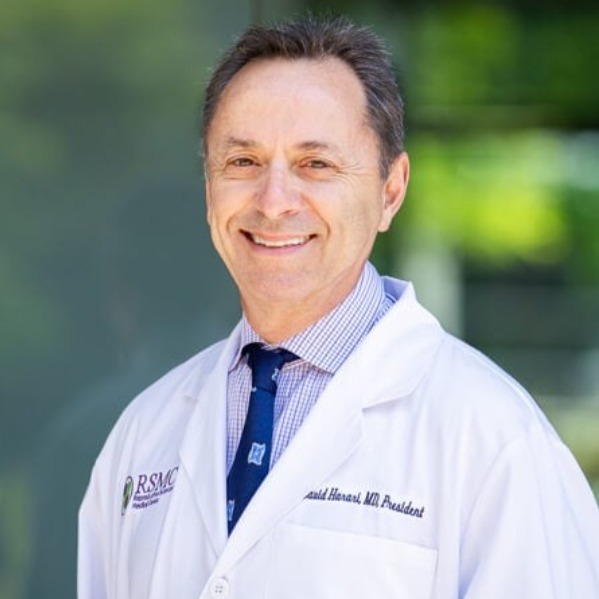
DR. DAVID HARARI | Medical Director & President of RSMC Medical Group
Dr. David Harari earned his medical degree from the University of Georgia Medical Center. He completed his internship at the Medical College of Georgia and subsequently underwent residency training at Mercy Hospital Medical Center. With over 30 years of clinical experience, Dr. Harari currently serves as the President of the San Diego Obstetrical and Gynecological Society, an association with more than 400 professional OB-GYN physician members.In his practice, Dr. Harari places great emphasis on respecting each patient's individual preferences and providing them with the most professional treatment plans. He works collaboratively with his patients to help them achieve their goals. Dr. Harari strongly believes in the importance of clear communication and understanding between doctor and patient. He is always willing to share his extensive medical experience and offer the most professional medical advice.
About Dr. David Harari
Other
-
 2026/04/07surrogacy
Can Women with Double Uterus Get Pregnant? A Comprehensive Guide to Surrogacy in US
-
 2025/07/21surrogacy
Will Trump’s Policies Affect Surrogacy Babies’ U.S. Citizenship?
-
 2024/11/06surrogacy
Introduction to Surrogacy in the USA: Process and FAQs All in One